Search Volume
How often a topic is looked up on YouTube. Use it to gauge interest.
Analyze the volume, competition and profitability of any YouTube Keyword. Find opportunities and ideas to grow your channel.
| Keyword |
Search Volume
|
Trend (12 wks)
|
Comp.
|
Profitability |
|---|
All metrics shown (Search Volume, Trend, CPC, Competition) are independent estimates generated by KeywordsRocket using public data from the YouTube Data API Services and internal heuristics. These values are not provided, verified, or endorsed by YouTube. No private or user-specific YouTube data is accessed. Results may be cached for up to 24 hours to optimize API usage and performance. By using this tool, you agree to the YouTube Terms of Service and our Terms and Privacy Policy.
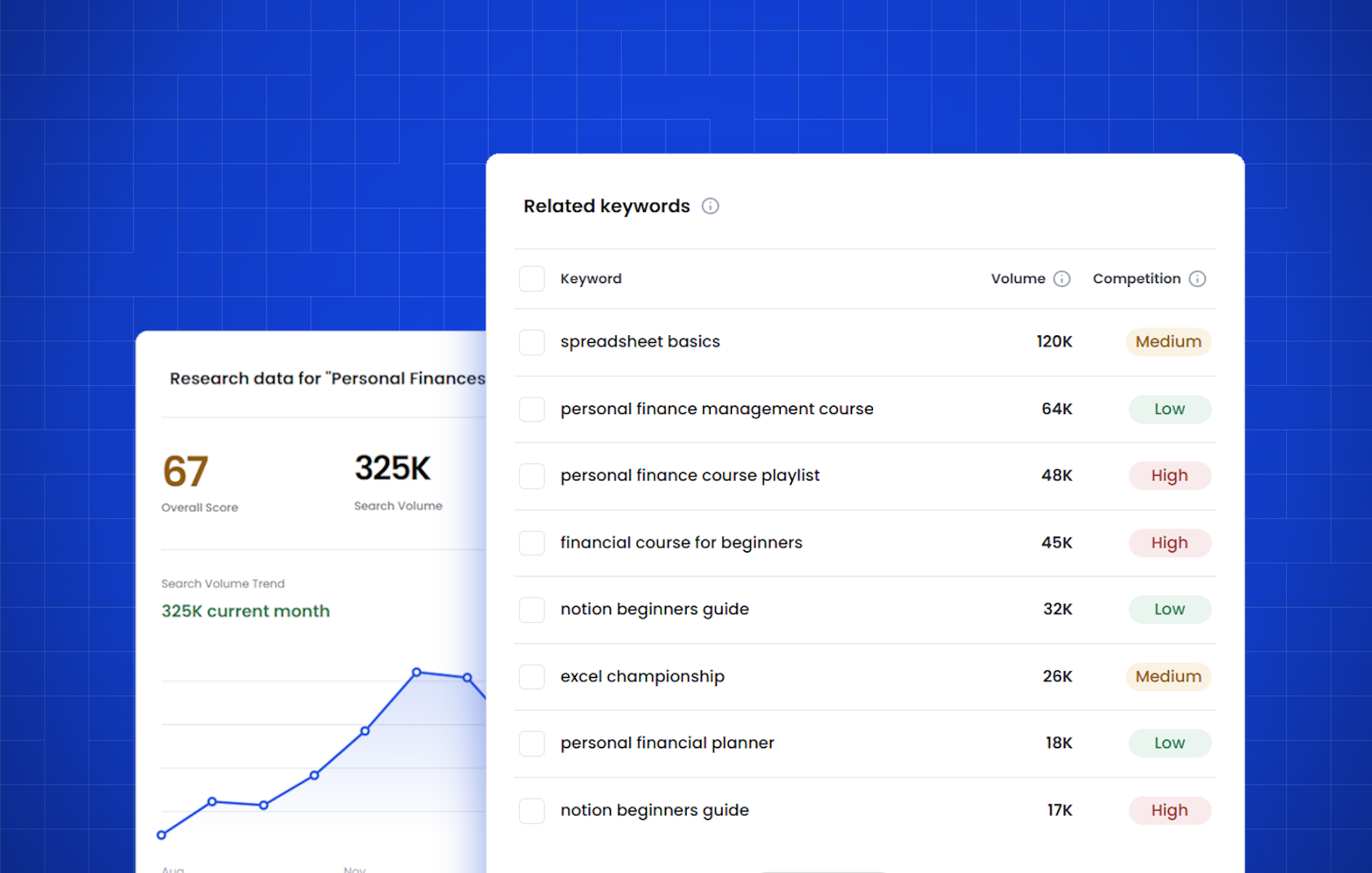
A YouTube keyword tool is a specialized research platform designed to uncover the exact phrases people use when searching on YouTube. It provides valuable data such as:
How often a topic is looked up on YouTube. Use it to gauge interest.
Spot rising opportunities early, avoid fading topics.
How crowded the topic is. Lower scores mean easier ranking.
How well this niche monetizes. Use it to spot high-RPM opportunities.
Did you know that YouTube is the world’s second-largest search engine, with over 20 million videos uploaded every day? With so much competition, simply creating great content isn’t enough. To stand out and reach your target audience, you need to know exactly what people are searching for-and that’s where a YouTube keyword tool comes in.
A YouTube keyword tool helps you discover the real search demand behind topics, so you can create videos that viewers are actively looking for. By understanding which keywords are popular, how competitive they are, and which ones offer the best monetization opportunities, you can grow your channel faster and smarter.
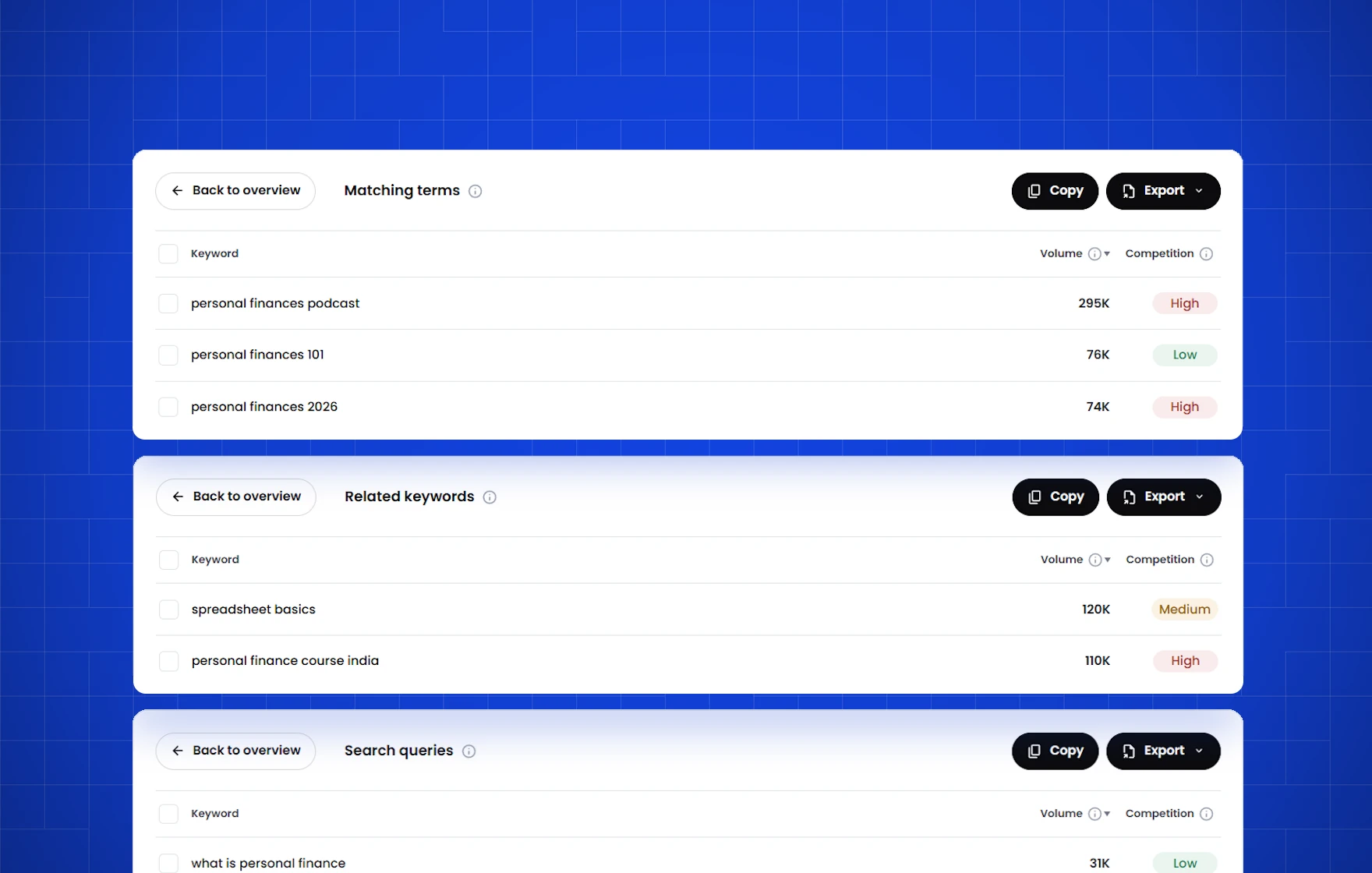
1. Start with a Broad Topic: Enter a general subject related to your channel. The tool will generate a list of relevant keyword ideas based on real user searches.
2. Analyze Search Volume and Competition: Look for keywords with a healthy balance: decent search volume but manageable competition. These are often long-tail keywords (more specific phrases) that give you the best chance to rank.
3. Evaluate Profitability: If monetization is a priority, focus on keywords and niches known for higher ad rates or affiliate potential.
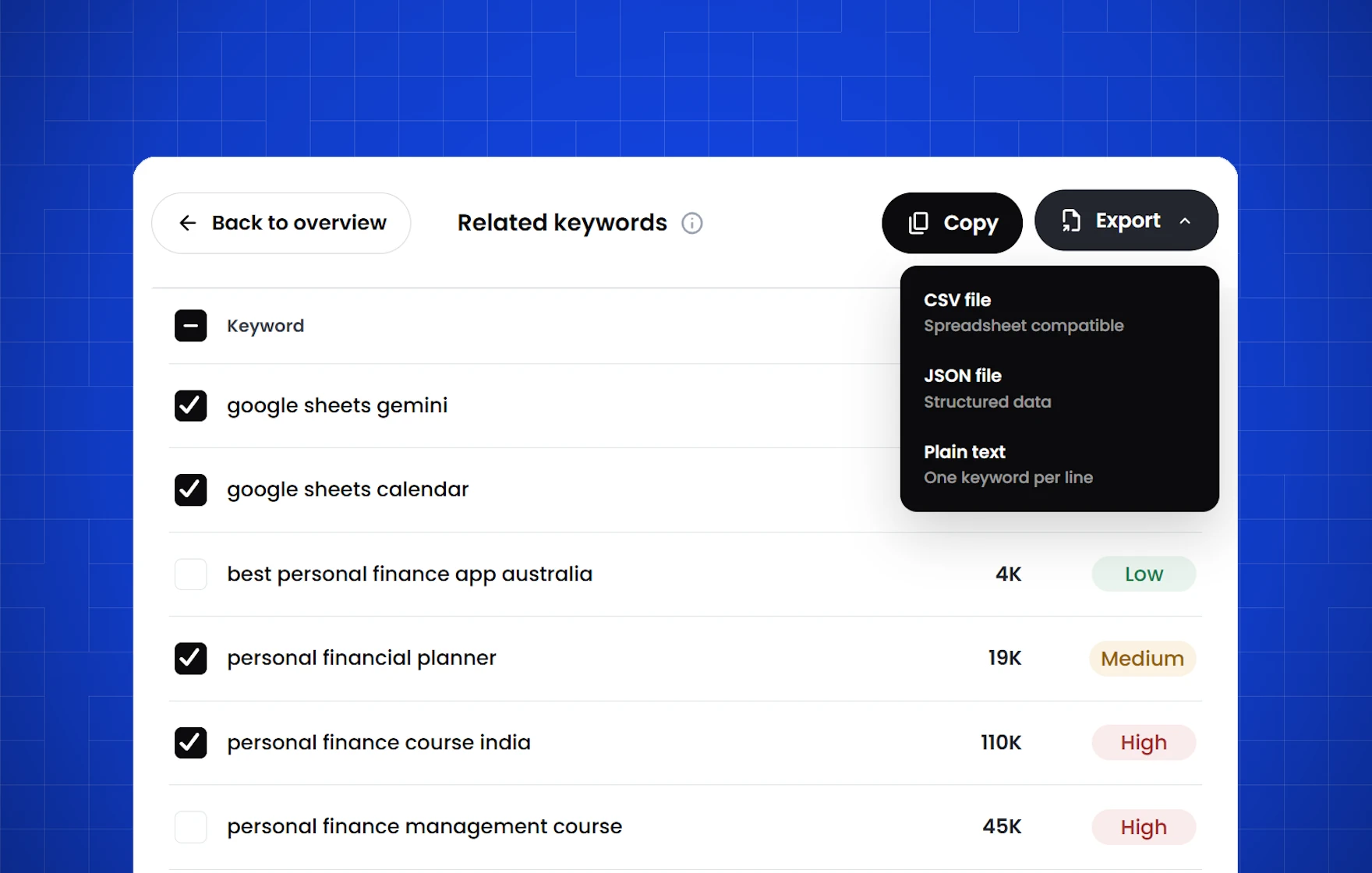
4. Refine Your List: Use filters to narrow down by country, language, or keyword type. Some tools let you focus on question-based keywords, trending topics, or exclude irrelevant terms.
5. Repeat and Expand: As you find promising keywords, use them as new “seed” topics to generate even more ideas.
Video Title: Place your main keyword near the beginning of your title. YouTube’s algorithm weighs this heavily when matching search queries.
Description: Use variations and related terms naturally in your video description. The first 150 characters are especially important for ranking and click-throughs.
Tags: Add your exact target keyword, common variations, broad category terms, and specific long-tail phrases. Tags help YouTube understand your content and suggest it to the right viewers.
Hashtags: Use relevant hashtags to increase discoverability. Try our free YouTube-Hashtag-Generator to find viral hashtags for your niche.
Based on real YouTube search demand, updated daily.
YOUTUBE VIDEOS ANALYZED
KEYWORDS DISCOVERED
SEARCHES RUN
Short, straight answers. No fluff.
Stop guessing and start growing. Use our YouTube keyword tool to find the topics your audience cares about and create videos that get results. Try it now and take your channel to the next level!