
 Continue with Google

TubeLab is a database-led YouTube research platform built for discovering niches, breakout channels, outlier videos, trending formats, and monetization signals. It is particularly strong when creators, agencies, or developers want to search a large indexed dataset or connect YouTube research to Claude, ChatGPT, Codex, n8n, or a custom application.
It is not the only way to build a research workflow. Based on month-to-month price, research coverage, data visibility, and the decisions most creators repeat each week, KeywordsRocket is my top all-round TubeLab alternative for creators who want niche validation, keyword demand, competitor analysis, outlier discovery, and source-level video analysis in one interface. 1of10 focuses on outliers and packaging, while Viewstats is built around broad channel analytics and thumbnail research.
This guide compares all three alternatives by normal monthly price, research depth, free access, usage model, data visibility, and the creator workflow each platform supports best.
How I compared them: Every paid price below uses standard month-to-month billing rather than an annual-equivalent discount. Feature claims are based on the companies' current public product pages, pricing pages, and documentation. Estimated revenue, RPM, saturation, and audience signals are treated as directional research inputs rather than official YouTube Analytics data.
Understanding TubeLab
TubeLab is designed around continuous discovery. Instead of starting with one channel and producing a single report, it indexes large numbers of channels and outlier videos so creators can filter for emerging markets, recently created breakout channels, viral formats, title patterns, subscriber ranges, monetization characteristics, and other opportunity signals.
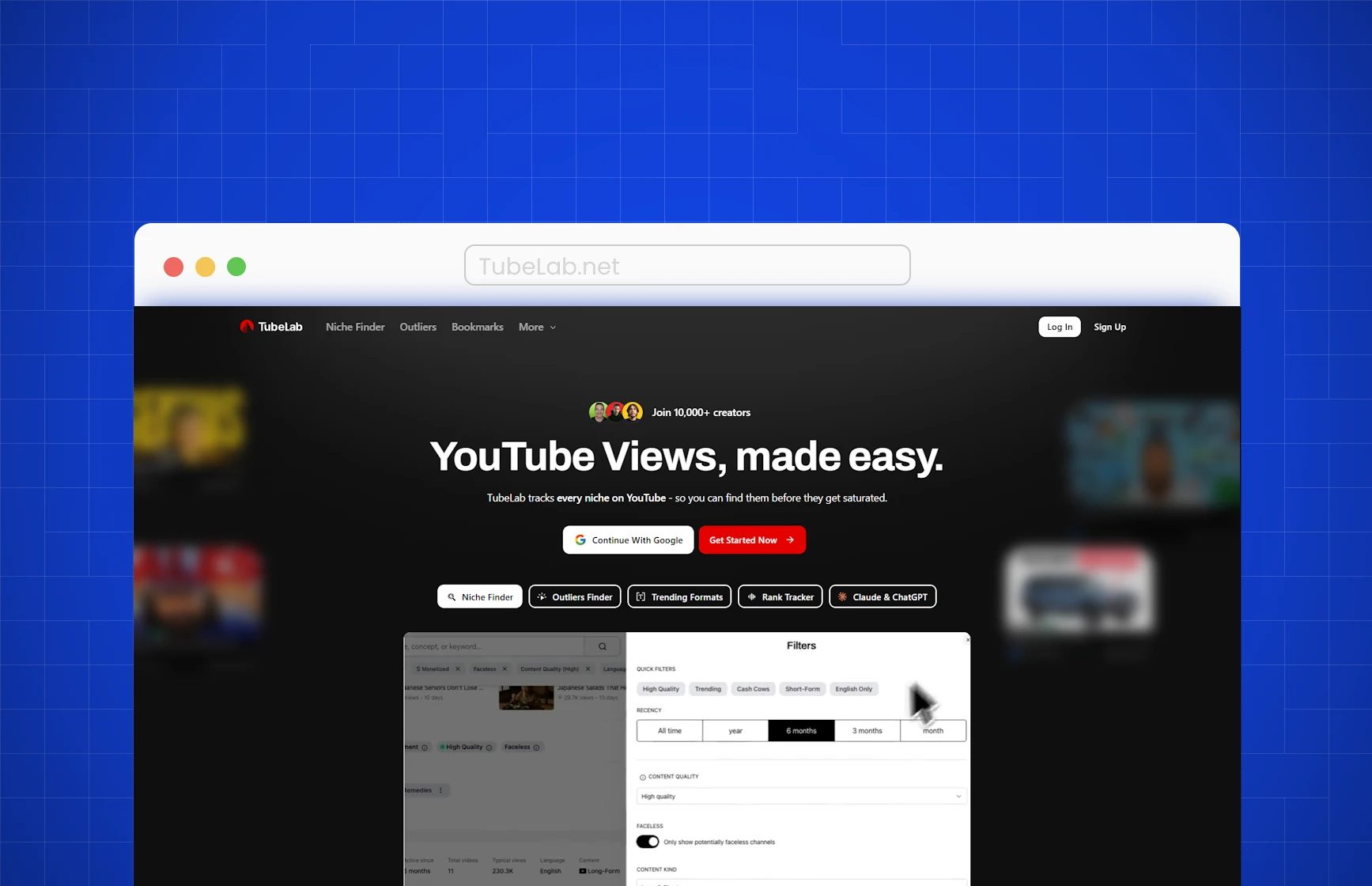
The product has expanded beyond its original rank-tracking roots. Its current public platform includes a YouTube Niche Finder, Outliers Finder, Trending Formats, Niche Analyzer, Rank Tracker, AI Outlier Ideation, a monetization-checking Chrome extension, an API, n8n automation, and an MCP server for AI assistants. TubeLab says its database covers hundreds of thousands of channels and millions of outlier videos, with new data added continuously.
Key Features
YouTube Niche Finder: TubeLab continuously surfaces channels across YouTube and lets users search for markets using filters such as channel size, age, growth, language, monetization, RPM estimates, revenue estimates, content type, and performance. The workflow is useful for discovering recently created channels that are growing before their category becomes obvious to a wider audience.
Outliers Finder: The outlier database identifies videos that materially exceed the publishing channel's normal performance. Users can search by topic and narrow the results by factors such as upload date, views, subscriber count, duration, and outlier multiplier. This makes TubeLab useful for finding proven formats, title structures, and visual packaging patterns across many niches.
Trending Formats and Title Research: TubeLab groups recurring formats and helps creators inspect title formulas, thumbnail patterns, and topics that appear across high-performing videos. This moves the product beyond a simple list of viral uploads and toward repeatable content-pattern research.
Niche Analyzer: The standalone analyzer reviews live market signals such as size, saturation, publishing activity, and monetization potential. It is useful as a quick validation layer before opening the larger channel database, although the resulting market and monetization values remain estimates derived from public signals.
AI Outlier Ideation: TubeLab can turn proven outlier formats into new video ideas. The advantage is that the AI starts from content that demonstrably outperformed rather than generating ideas from a generic language-model prompt with no current YouTube context.
Rank Tracker: TubeLab retains a search-ranking workflow for tracking where videos appear for selected YouTube queries over time. This is useful for creators whose traffic strategy depends on tutorials, reviews, how-to content, or other search-led formats.
API, MCP, and n8n Automation: TubeLab offers programmatic access to channel search, related channels, outlier search, transcripts, comments, videos, and scans. Its MCP server lets supported AI clients query the same data conversationally, while n8n and webhooks support scheduled research and custom workflows. This is one of TubeLab's clearest advantages over creator tools that only provide a web dashboard.
Limitations and Challenges
No Dedicated Keyword Research Workspace: TubeLab includes rank tracking and can help users infer demand from channels, videos, and market activity, but it does not provide a dedicated keyword-research workflow comparable to a platform that expands one seed into matching terms, related queries, viewer questions, estimated demand, and competition. That matters when the content decision begins with explicit search intent rather than an emerging channel or viral format.
Discovery Is Broader Than Source-Level Analysis: TubeLab can retrieve video details, transcripts, and comments through its API and MCP tools, but its main web product is built around finding channels, niches, and outliers. It does not position a dedicated source-grounded video-analysis workspace for reviewing a video's title promise, metadata, hook, introduction, structure, calls to action, and script weaknesses in one guided interface.
The Credit Allowance Matters for Automation: TubeLab Pro costs $29/month and includes 300 credits. According to the API documentation, outlier searches use 2 credits, channel searches use 5 credits, and fresh scans can use 50 to 100 credits, while several direct channel, video, transcript, and comment endpoints are free with an active subscription. The allowance is workable for normal research, but repeated automated searches or large scans can consume it faster than a dashboard user expects.
Estimated Monetization Is Not First-Party Revenue Data: RPM, revenue, monetization, and profitability signals can help compare opportunities, but TubeLab cannot see a competitor's private YouTube Analytics, actual advertising mix, sponsorship contracts, affiliate income, production costs, or audience geography. The estimates are useful for prioritization, not proof that a niche will produce a particular income.
A Large Database Can Add Research Overhead: TubeLab is valuable when the user wants to scan many markets. A creator who already knows the niche and only needs to decide what to publish next may spend more time filtering a large discovery surface than working through a focused sequence of demand, competitors, outliers, and source videos. More indexed data does not automatically create a clearer weekly decision.
Paid Entry Before the Full Workflow: TubeLab provides several free standalone utilities, including its Niche Analyzer, rank checker, monetization checker, and video-data extractor. Its own public comparison pages state that the core subscription does not offer a full free trial. Creators should therefore compare how much of each workflow is available before subscribing.
KeywordsRocket: My Top All-Round TubeLab Alternative
Core Features and Benefits
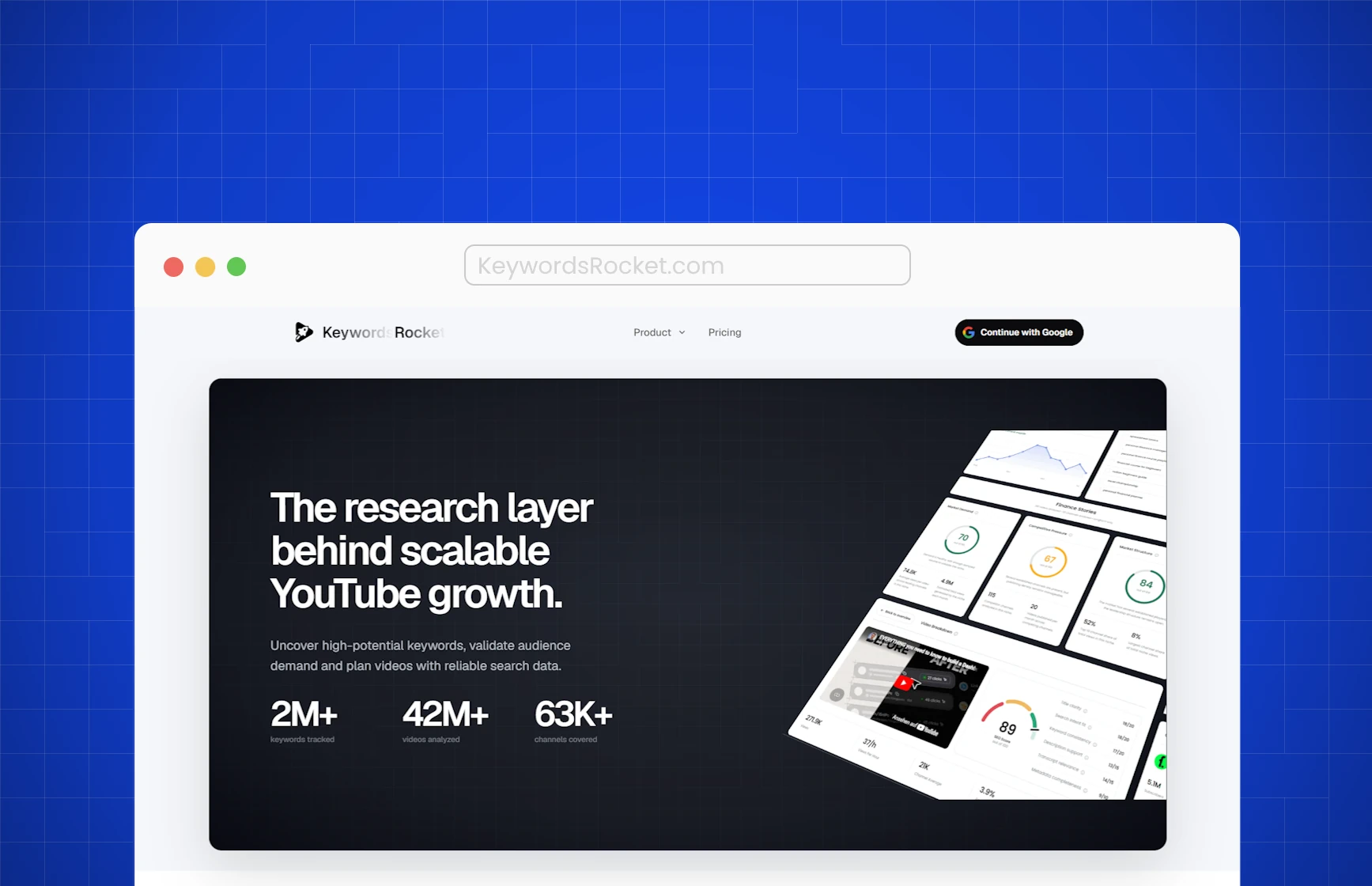
KeywordsRocket is not trying to replace TubeLab's developer API or become the largest indexed channel database. It is designed around a different question: what evidence does a creator need to make the next content decision from one workspace?
The workflow connects market validation, keyword demand, competitor behavior, outlier performance, metadata, transcripts, and video structure. Instead of asking the user to begin with a large database and assemble the next steps manually, KeywordsRocket moves from market-level evidence to an individual source video in a consistent research sequence.
Dedicated Keyword Demand Research
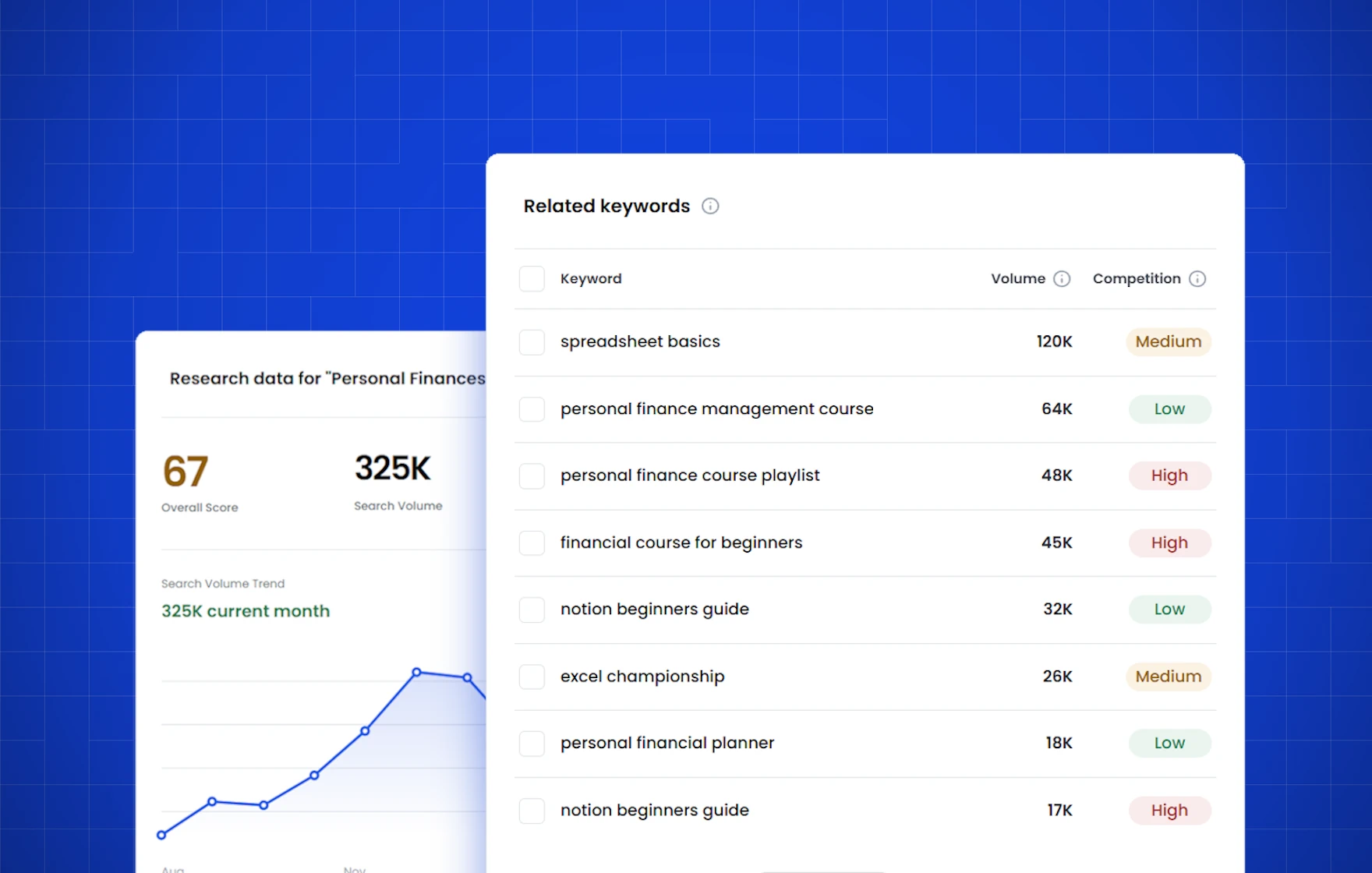
The clearest difference is keyword research. TubeLab can show channels and videos succeeding around a topic, but that does not directly reveal the language viewers use when they search. A market may contain strong outliers while still offering little stable search demand, or it may contain valuable long-tail questions that never become dramatic outliers.
KeywordsRocket's YouTube Keyword Tool expands a seed topic into matching keywords, related queries, and viewer-style questions. Estimated demand and competition signals make it possible to compare search intent before choosing a title or committing to production. The creator can separate a broad topic from a specific problem that viewers are actively trying to solve.
This is particularly useful for tutorials, software, education, reviews, professional content, and evergreen channels. A video does not need to become a 20x outlier to be strategically valuable. It may rank for a narrow query, attract qualified viewers for years, and generate leads or product revenue long after the initial upload window.
Niche Validation from a Direct Search
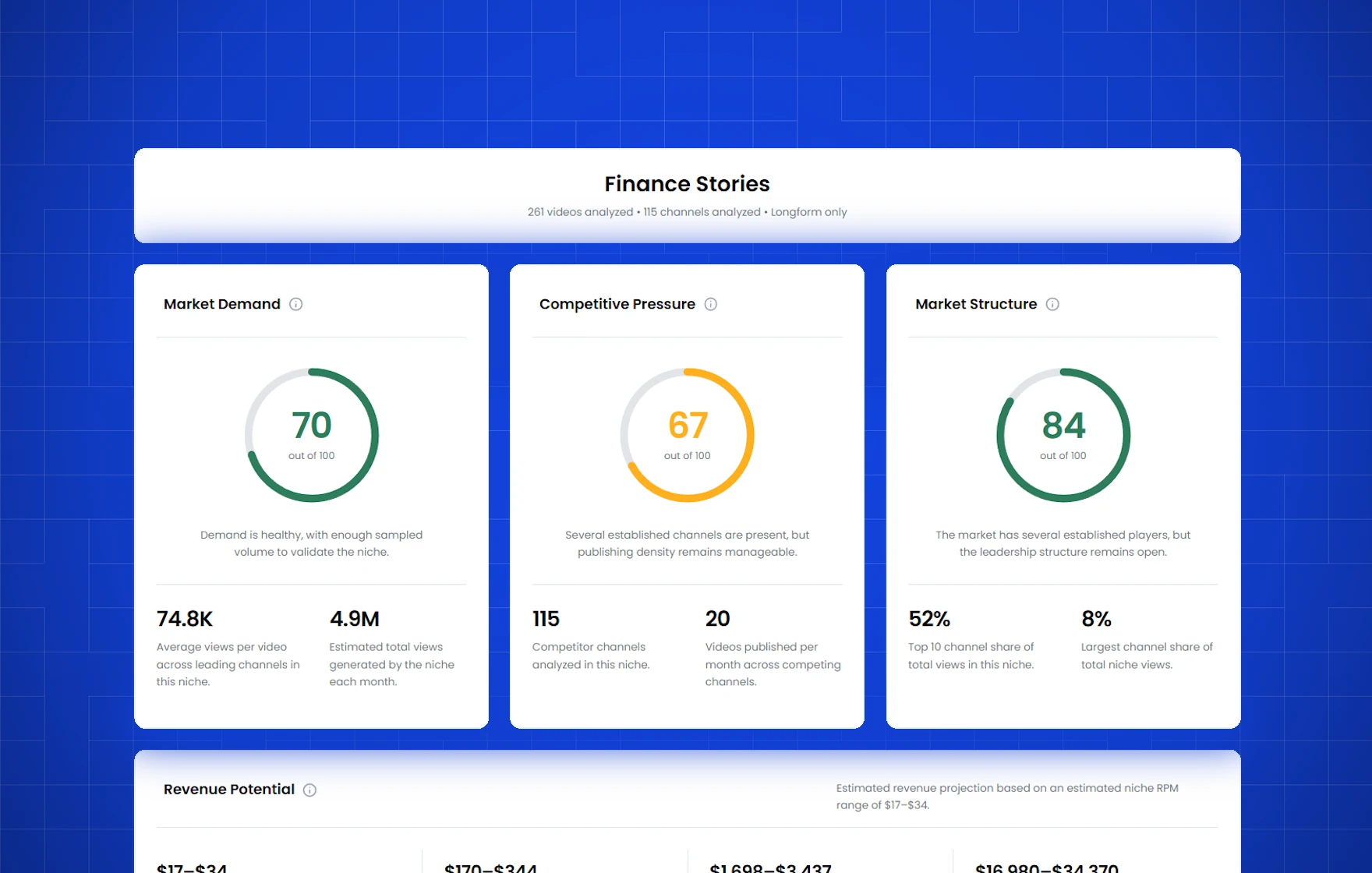
TubeLab's database is strong when the goal is to browse emerging channels across many categories. KeywordsRocket's YouTube Niche Analyzer is more direct when the creator already has a market in mind and wants an immediate, structured assessment of that specific niche.
The analyzer reviews demand, active competition, market structure, publishing activity, channel concentration, and estimated monetization potential. It does not treat one breakout channel as proof that the entire niche is attractive. A creator can see whether performance is distributed across several channels, concentrated around one incumbent, driven by an unusual upload cadence, or supported by multiple repeatable content formats.
This reduces a common research error: finding several exciting outliers and assuming the market itself is healthy. KeywordsRocket keeps the broader market visible before the workflow narrows into competitors and videos.
Competitor Analysis Around Repeatable Behavior
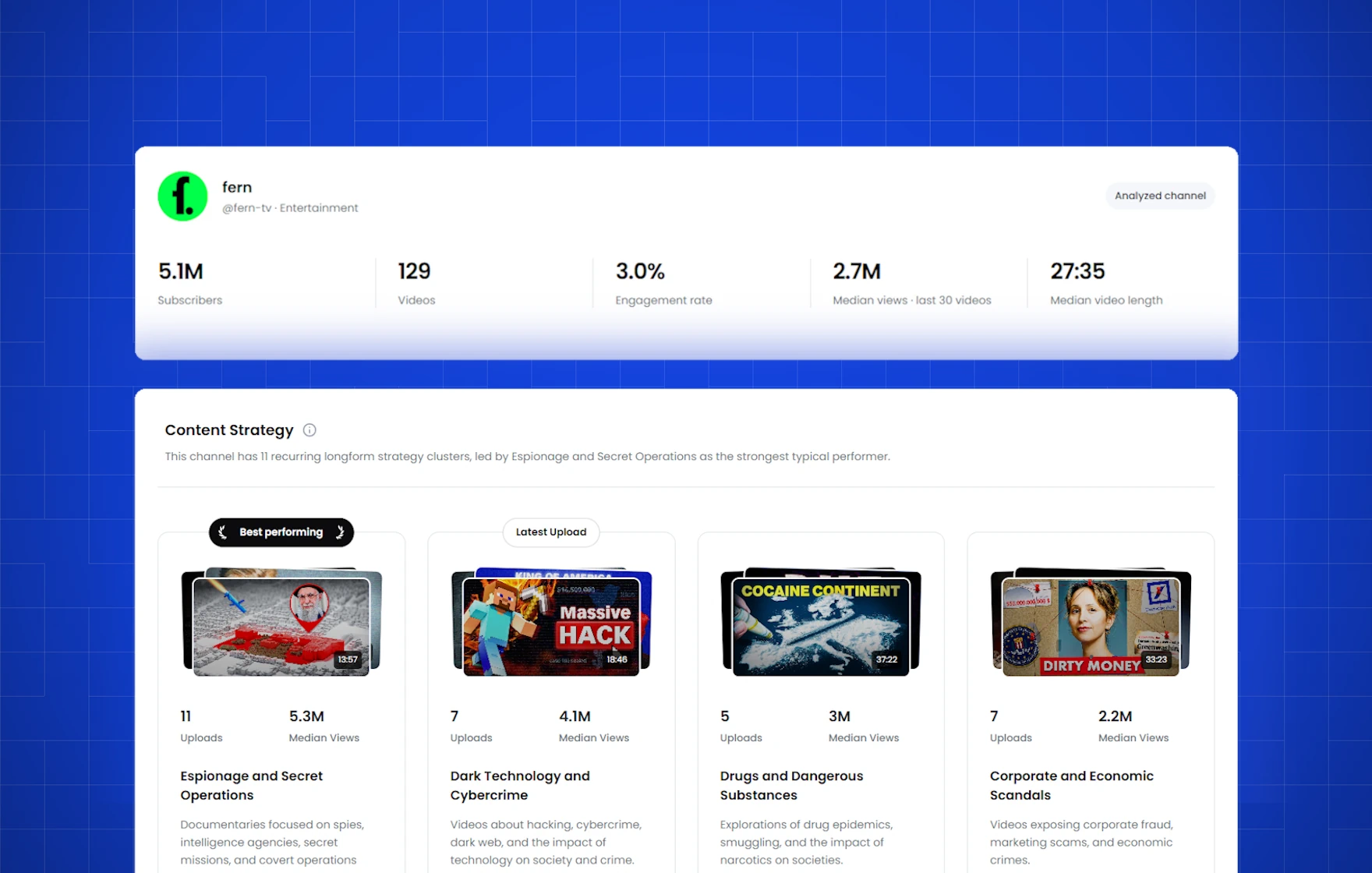
KeywordsRocket's Channel Analyzer focuses on observable operating patterns: subscribers, recent median views, engagement, upload frequency, publishing rhythm, typical video length, content clusters, and breakout uploads. These metrics help distinguish a repeatable channel system from a collection of isolated viral videos.
Medians matter because averages can be distorted by one unusually successful upload. Content clusters matter because repetition shows whether a creator has found a durable audience problem. Publishing rhythm matters because a daily Shorts operation and a twice-monthly documentary channel cannot be compared by views alone.
TubeLab can surface many relevant channels and provide their public attributes. KeywordsRocket is the better fit when the next step is a guided teardown of how one competitor actually publishes, which themes repeat, and which uploads repeatedly exceed its recent baseline.
Outlier Discovery Without Losing Context
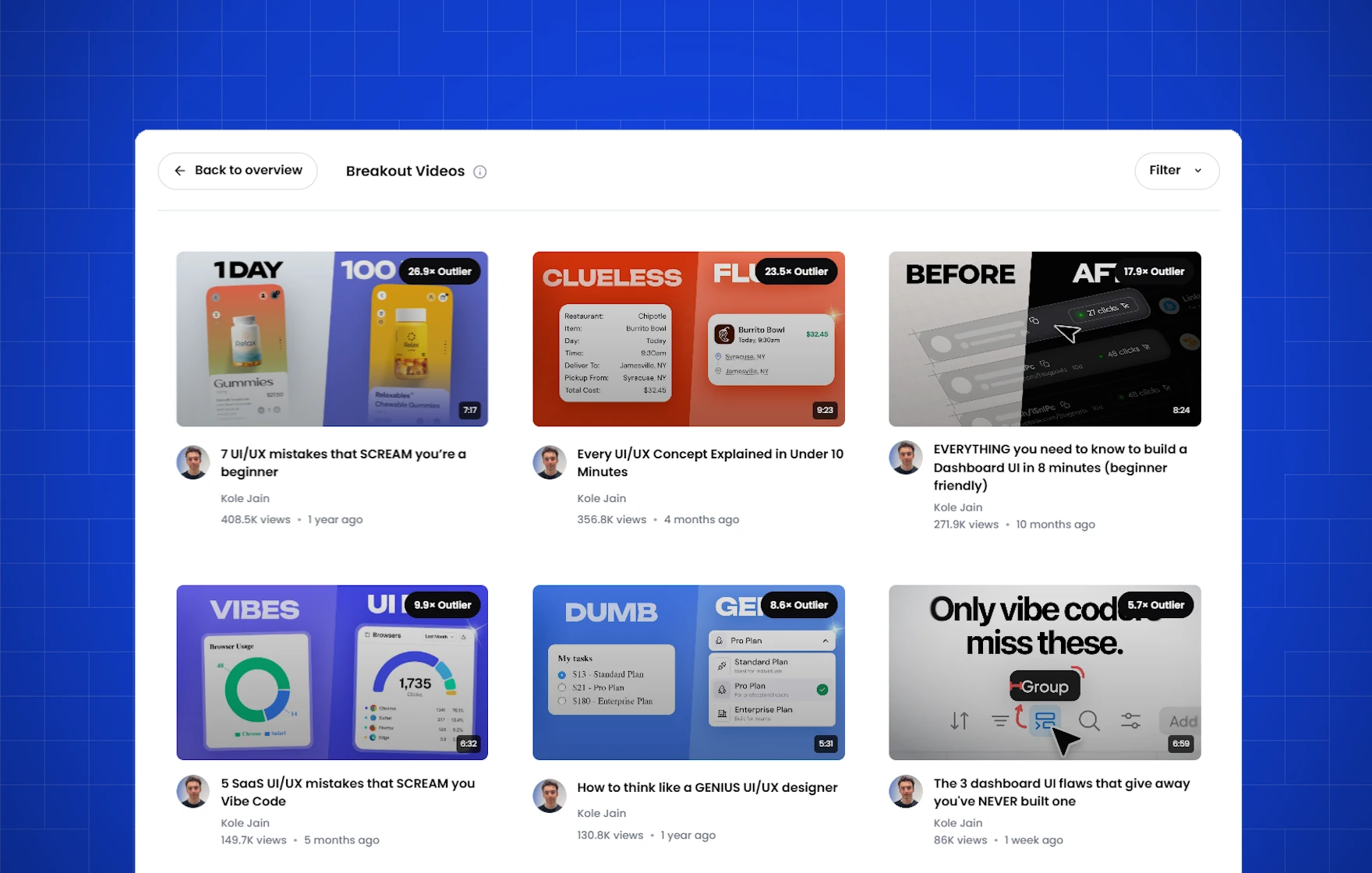
Both platforms can find videos that outperform a channel baseline. KeywordsRocket's Outlier Finder emphasizes a focused result set with filters for views, views per hour, subscriber count, upload age, video length, and outlier score. The goal is not to show the largest possible library. It is to narrow the evidence until the remaining videos match the creator's realistic channel size, format, production model, and time horizon.
This distinction matters because the most impressive outlier is often the least reproducible. A celebrity collaboration, major news event, expensive documentary, or established creator can produce a large multiplier that offers little practical guidance to a smaller channel. Filtering by channel size, age, velocity, and format makes the evidence more comparable.
The outlier then remains connected to the wider research. The creator can move back to the market, compare keyword demand, open the publishing channel, and analyze the source video rather than treating the multiplier as the final answer.
Source-Grounded Video and Script Analysis
Discovery should end at the source. KeywordsRocket can analyze a selected video's metadata and transcript to review title and intent fit, description context, SEO signals, hook, introduction, structure, calls to action, and script-improvement opportunities. This is the stage where a promising topic becomes a usable creative brief.
The workflow helps separate topic performance from execution. Two videos can cover the same idea while producing very different results because one confirms the title promise immediately, structures the argument more clearly, creates stronger curiosity, or introduces the call to action without breaking momentum. A database can identify the winning video; source-level analysis helps explain what the creator actually did.
Simpler Month-to-Month Value
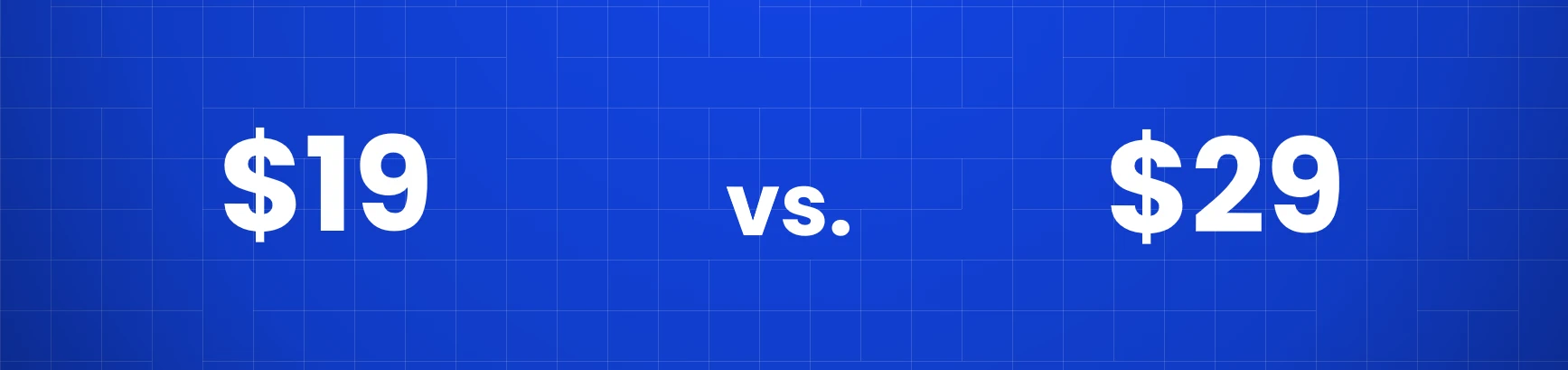
KeywordsRocket Pro costs $15/month, while TubeLab Pro costs $29/month on monthly billing. KeywordsRocket is therefore $14 per month, or roughly 48%, below TubeLab's standard monthly entry price.
The products are not identical. TubeLab's price includes API, MCP, automation, and a much larger indexed discovery database. KeywordsRocket's value comes from providing a more guided creator workflow with dedicated keyword research and source-level video analysis. The better purchase depends on whether you need programmatic scale or a focused interface for recurring content decisions.
Pricing and Plans
KeywordsRocket lets signed-in creators use its core tools without a search-count limit. Pro costs $15/month and adds the paid-plan features shown on the pricing page rather than charging a separate credit amount for each normal search.
Business costs $99/month and is designed for agencies, teams, and professional creators. It includes the broader research workflow, a shared workspace, and access for up to 10 team members.
Choose KeywordsRocket when research is primarily performed by a creator or strategist inside the product. Choose TubeLab when API calls, MCP access, custom agents, automated scans, or a very large discovery database are central requirements.
Use Cases
Search-Led Content Planning: Expand one topic into related keywords and viewer questions, compare estimated demand and competition, and select an intent that can support evergreen traffic.
Niche Validation: Review demand, competition, market structure, concentration, publishing activity, and estimated monetization before committing to a new channel or category.
Competitor Research: Inspect recent medians, upload rhythm, content clusters, engagement, video length, and repeated breakout patterns for a specific channel.
Comparable Outlier Discovery: Filter outliers until the remaining videos match a realistic channel size, upload age, format, velocity, and production model.
Video Planning: Analyze the selected source's title, metadata, transcript, hook, structure, and calls to action before writing an original brief.
2 More Alternatives to TubeLab
KeywordsRocket is my top all-round choice for a connected market-to-video workflow, but it is not the best specialist for every use case. 1of10 and Viewstats solve different parts of the YouTube research process.
1of10
Price: Free plan available; Basic costs $49/month and Pro costs $89/month on monthly billing. Focus: Outlier discovery, competitor tracking, niche exploration, thumbnail research, titles, ideas, and packaging generation. Free Access: The free plan includes outlier search, bookmarks, and tracking for up to three channels.
1of10 is built around the same underlying insight as every outlier platform: a video's performance becomes more meaningful when it is compared with the publishing channel's normal baseline. The product adds advanced outlier filters, competitor tracking, niche exploration, virality monitoring, trending formats, thumbnail search, saved folders, and a Chrome extension.
The key difference is what happens after discovery. Basic contains the research tools. Pro adds monthly AI credits for thumbnail generation, title generation, idea generation, optimization, and optional team members. This makes 1of10 particularly useful for creators who want to move directly from a proven content pattern into the title-and-thumbnail development stage.
However: 1of10 is less complete for dedicated keyword demand, structured niche validation, and transcript-grounded video analysis. It also does not provide TubeLab's API and MCP automation layer. Choose 1of10 when outliers and packaging are the center of the workflow. Choose KeywordsRocket when search intent, market structure, competitor behavior, and source analysis matter equally.
Viewstats
Price: Free public analytics are available; Viewstats Pro costs $49.99/month, while Business starts at $249/month. Focus: Public channel analytics, competitors, outliers, thumbnail search, alerts, collections, and creator dashboards. Free Access: The public site and Chrome extension provide a useful free analytics layer.
Viewstats is a broad YouTube analytics platform co-founded by MrBeast and Chucky Appleby. Its free site is useful for checking public channel performance, growth, top lists, and comparable creators. Pro adds competitor monitoring, outlier search, alerts, thumbnail search, collections, and a creator dashboard.
Viewstats is strongest when the user already knows which channels or categories matter and wants an accessible analytics layer around them. Thumbnail Search and Collections are particularly useful for organizing packaging references, while alerts make the product practical for monitoring niches that move quickly.
However: Viewstats Pro costs substantially more than TubeLab and KeywordsRocket. It is also less focused on dedicated keyword demand, direct niche validation, and transcript-level content analysis. Choose Viewstats for broad analytics, alerts, and packaging research. Choose TubeLab for database-led discovery and automation. Choose KeywordsRocket for a focused market-to-video research workflow.
Comparison Table: All TubeLab Alternatives
| Feature | KeywordsRocket | 1of10 | Viewstats | TubeLab |
|---|---|---|---|---|
| Starting Paid Price | $19/mo | $49/mo | $49.99/mo | $29/mo |
| Best For | Connected market-to-video research | Outliers and packaging | Broad analytics and alerts | Database discovery and automation |
| Niche Discovery | ✅ Direct analysis | ✅ Explorer | ⚠️ Indirect | ✅ Large database |
| Outlier Discovery | ✅ Filtered baselines | ✅ Core workflow | ✅ Pro | ✅ Large database |
| Keyword Research | ✅ Core workflow | ⚠️ Free generator only | ❌ | ❌ No dedicated tool |
| Competitor Analysis | ✅ Metrics and patterns | ✅ Tracking | ✅ Analytics | ✅ Database and similar channels |
| Video / Script Analysis | ✅ Source-grounded | ❌ No comparable workflow | ❌ | ⚠️ Data access, no dedicated workflow |
| API / MCP Access | ❌ | ❌ | ✅ Business API | ✅ Core advantage |
| Usage Model | Fair-use access | Plan limits / AI credits | Unlimited | Subscription + 300 credits |
How to Choose the Right TubeLab Alternative
The right product depends on the repeated decision you need to make. Do not choose by database size or feature count alone. Choose the workflow whose primary output matches the work you actually perform each week.
For a Connected Research Workflow
Choose KeywordsRocket if you want to move from niche validation to keyword demand, competitor patterns, outlier discovery, and source-level video analysis without switching between separate tools. It is also the lowest-priced paid option in this comparison at $15/month.
For Large-Scale Discovery and Automation
Choose TubeLab if your priority is searching a large database of emerging channels and outliers, connecting YouTube data to Claude or ChatGPT, building n8n workflows, or using an API inside a custom process. Its 300-credit allowance should be planned carefully when scans or automated searches run frequently.
For Outliers, Titles, and Thumbnails
Choose 1of10 if the central workflow is discovering overperforming videos and immediately developing stronger titles, thumbnails, and idea variations around those patterns. The free plan makes the outlier layer easy to test before upgrading.
For Broad Analytics and Alerts
Choose Viewstats if you want fast public channel analytics, competitor monitoring, outliers, thumbnail search, alerts, and research collections. Its free site is useful for quick checks; Pro is more relevant when analytics and packaging research are part of every publishing cycle.
Final Recommendation
Based on the criteria used here, KeywordsRocket is my top recommendation for most solo creators because it combines the widest practical research sequence with the lowest normal monthly price. TubeLab remains the specialist choice for database-scale discovery, API access, MCP connections, and automation. 1of10 is best for packaging-led outlier research, while Viewstats is strongest for broad analytics and alerts.
Conclusion
TubeLab is a strong product because it gives creators and developers access to a large, continuously updated discovery layer. Its Niche Finder, Outliers Finder, trending formats, rank tracking, AI ideation, API, MCP server, and n8n integrations make it unusually flexible for high-volume research and automation.
The tradeoff is that database breadth does not cover every research decision. TubeLab does not provide a dedicated keyword-research workspace, and its main web workflow is less focused on guided source-level video and script analysis. The 300-credit allowance also becomes relevant when the product is used programmatically rather than manually.
The three alternatives solve those gaps differently. 1of10 connects outliers to titles and thumbnails. Viewstats provides broad analytics, alerts, and packaging research. KeywordsRocket connects niche, keyword, competitor, outlier, and source-video evidence inside one lower-cost creator workflow.
At $15/month, KeywordsRocket costs $14 less than TubeLab on monthly billing. That does not make it a replacement for TubeLab's API or indexed database. It makes it the stronger default for creators whose main goal is not to build an automated research system, but to make a better, more verifiable decision about what to publish next.
Choose TubeLab when scale and automation are the product. Choose the alternative when the missing part of your workflow is more important than the database itself.
Start with KeywordsRocket for free.
Frequently Asked Questions
What is the best alternative to TubeLab?
Based on normal monthly price and research coverage, KeywordsRocket is my top TubeLab alternative for most creators who want niche validation, keyword demand, competitor analysis, outlier discovery, and source-level video analysis in one workflow. 1of10 is stronger for packaging, while Viewstats is built for broad analytics.
How many TubeLab alternatives are compared here?
This guide compares three alternatives: KeywordsRocket, 1of10, and Viewstats. TubeLab remains in the feature table as the reference product.
Is KeywordsRocket cheaper than TubeLab?
Yes on standard monthly billing. KeywordsRocket Pro costs $15/month and TubeLab Pro costs $29/month, making KeywordsRocket $14 or roughly 48% cheaper per month.
What does KeywordsRocket offer that TubeLab does not?
KeywordsRocket includes a dedicated keyword-research workflow with matching terms, related queries, viewer questions, estimated demand, and competition. It also provides a guided source-level video analysis covering metadata, transcript, hook, structure, SEO, and script improvements.
What does TubeLab offer that KeywordsRocket does not?
TubeLab offers a much larger indexed discovery database plus API, MCP, n8n, webhook, and custom-agent access. It is the stronger choice when research needs to be automated, embedded in another product, or performed across many niches and channels at scale.
Does TubeLab have keyword research?
TubeLab includes rank tracking and topic discovery through channels, outliers, and formats, but it does not publicly position a dedicated keyword-research workspace comparable to tools that expand a seed into queries, questions, demand estimates, and competition metrics.
Is 1of10 a good TubeLab alternative?
1of10 is a good alternative when outlier discovery, title development, thumbnail research, and packaging generation are the center of the workflow. It does not match TubeLab's API and MCP layer or KeywordsRocket's dedicated keyword and source-analysis workflow.
Is Viewstats a good TubeLab alternative?
Viewstats is a strong alternative for public channel analytics, competitor monitoring, outlier discovery, thumbnail search, alerts, and collections. It costs more and is less focused on direct niche validation, keyword demand, or transcript-level video analysis.
Which TubeLab alternative is best for YouTube niches?
Choose KeywordsRocket when you already have a niche idea and want to connect market structure, keyword intent, competitors, outliers, and source evidence. Choose TubeLab itself when the priority is scanning a large database for emerging channels and niches you have not identified yet.
Which alternative is best for automation?
TubeLab remains the strongest automation option in this comparison because API, MCP, n8n, webhooks, transcripts, comments, and searchable channel and outlier data are central parts of the product. Viewstats provides a Business API, while KeywordsRocket and 1of10 are primarily interface-led research products.
Are TubeLab revenue and RPM estimates accurate?
They are directional estimates rather than official first-party metrics. Actual revenue depends on audience geography, ad inventory, video length, advertiser demand, memberships, sponsorships, affiliate income, production costs, and other private factors. Use estimates to compare opportunities, not to forecast guaranteed earnings.
How quickly can TubeLab credits be used?
It depends on the workflow. TubeLab's API documentation lists outlier searches at 2 credits, channel searches at 5 credits, and fresh scans at 50 to 100 credits, while direct video, transcript, comment, and channel-content endpoints are free with an active subscription. Manual browsing can therefore use credits slowly, while repeated scans or automated searches can use the 300-credit monthly allowance much faster.
